

Established in 2012 by the Fédération Internationale de l’Automobile (FIA) and Automobile Club de l’Ouest (ACO), the FIA World Endurance Championship (FIA WEC) represents the international pinnacle of the long-distance discipline, in which races last anything from six hours up to 24.
The popularity of the pioneering series is evidenced by the sheer number of manufacturers involved – a record-equalling 14 in 2026, featuring cutting-edge race cars from Alpine, Aston Martin, BMW, Cadillac, Corvette, Ferrari, Ford, new arrival Genesis, Lexus, McLaren, Mercedes-AMG, Peugeot, Porsche and Toyota. All of them clearly recognise the value of competing in a championship that helps to accelerate advances in technology, performance and safety for their road-going vehicles.
Freedom of design is a key part of the appeal, and with seven different winners from eight races in the headlining Hypercar category and six in the supporting LMGT3 division in 2025, unpredictability comes as standard – offering up an irresistible challenge for competitors and an unmissable experience for fans.
Contested across multiple continents, some of the world’s finest drivers do battle in Italy, Belgium, Brazil, the USA, Japan, Qatar and Bahrain, alongside the series’ flagship event in France in mid-June – the legendary 24 Hours of Le Mans, renowned as one of the sport’s very toughest tests. Such a diverse calendar guarantees FIA WEC’s stakeholders and partners intercontinental visibility in key regions around the world.
So buckle up and settle in, because if you’re after action and entertainment from the first lap to the chequered flag, you’ve come to exactly the right place!
The Hypercar class is the top-tier in the FIA World Endurance Championship, pitting cutting-edge, purpose-built racing prototypes piloted by professional drivers against each other in a sensational spectacle of sporting prowess.
The regulations are focused on controlling performance, allowing participants to choose cost-effective solutions since significant expenditure does not necessarily lead to performance gains – a strategy that ensures equality of opportunity across the grid.
Two titles are up for grabs, with competitors doing battle for both the FIA Hypercar World Endurance Manufacturers’ Championship and FIA Hypercar World Endurance Drivers’ Championship.
Replacing the long-standing LMGTE regulations, LMGT3 joined the FIA World Endurance Championship package in 2024 and proved to be an immediate success.
Based around the FIA’s global GT3 technical platform, the spotlight is on private teams and Pro-Am line-ups, represented inside the cockpit by a blend of emerging young talents and gentlemen drivers. The cars – race-tuned versions of recognisable road-going models – feature a number of FIA WEC-specific adaptations such as digital display panels, and are all equipped with Goodyear tyres.
Alongside their quest to clinch the two major LMGT3 crowns – the FIA Endurance Trophy for LMGT3 Teams and FIA Endurance Trophy for LMGT3 Drivers – competitors in this category additionally do battle for the Goodyear Wingfoot Award, presented to the driver that posted the fastest average lap times during their stints behind the wheel over the course of the campaign.
Alpine
Legendary French manufacturer Alpine enters the 2026 Hypercar season with a pair of its familiar, blue-liveried, 3.4-litre Mecachrome-powered A424 prototypes.
2025 proved to be a breakthrough campaign for Alpine Endurance Team, yielding a maiden victory for the Signatech-run A424 at Fuji, as Charles Milesi, Paul-Loup Chatin and Ferdinand Habsburg triumphed in the FIA World Endurance Championship’s milestone 100th race.
For 2026, Alpine has recruited two new faces, with former FIA WEC LMP2 champion and 24 Hours of Le Mans class-winner António Félix da Costa joining the #35 crew alongside Milesi and Habsburg. In the sister #36 car, FIA Formula 2 Championship race-winner Victor Martins will partner incumbent duo Frédéric Makowiecki and Jules Gounon, following Chatin’s departure to the nascent Genesis Magma Racing programme.
Spearheaded by Team Principal Philippe Sinault and benefitting from the sporting experience of Nicolas Lapierre, Alpine will be eager to add to its excellent Japanese success.
Aston Martin
Aston Martin returned to the top-tier of international endurance racing for the first time since 2011 last season with the Heart of Racing stable. After a challenging start, the British marque running under an American entrant flag made strong progress, producing several notable performances.
The crowd-pleasing V12 Valkyrie Hypercar – one of only two normally-aspirated models in the field – is derived from the road and struck a chord amongst race fans all around the world with especially strong showings at Le Mans and Fuji as well as in the season finale in Bahrain.
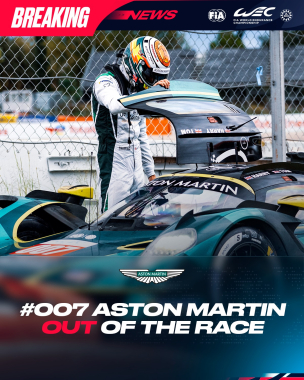
The all-British line-up of Harry Tincknell, Tom Gamble and Ross Gunn in the #007 Valkyrie has been retained for 2026, while the sister #009 entry similarly embraces continuity with a trio composed of experienced Danish ace Marco Sørensen, Spain’s Alex Riberas and successful IMSA racer, Roman De Angelis.
BMW
Big things are expected of BMW in 2026, as the Bavarian brand competes with a heavily-revised M Hybrid V8 Hypercar that has benefitted from extensive testing. The new-look model features visible and not-so-visible changes. Most strikingly, an adjusted splitter optimises airflow, while the BMW ‘kidney grille’ is slightly smaller. Additionally, the German prototype sports new headlights.
While the car looks very different, the driver roster sees complete continuity with Kevin Magnussen, Dries Vanthoor and Raffaele Marciello staying together in the #15 machine, while Robin Frijns, René Rast and Sheldon van der Linde team up once more in the #20 entry.
The Vincent Vosse-led WRT organisation similarly continues to run the operational elements of BMW’s global endurance attack.
Cadillac
Cadillac boasts a rich and proud history in endurance racing and is now a firmly-established FIA WEC contender as it enters its fourth year with the V-Series R Hypercar – the American manufacturer’s second season in alliance with renowned UK-based organisation, JOTA.
The rumbling, 5.5-litre, V8-powered V-Series R Hypercar, running under the Cadillac Hertz Team JOTA banner, enjoyed a very strong 2025 campaign, winning its first race in the series at Interlagos and taking a hat-trick of pole positions at Le Mans, Interlagos and Fuji courtesy of Alex Lynn.
The #12 entry retains the rapid Lynn, Will Stevens and Norman Nato trio for 2026, while the sister #38 car sees Cadillac IMSA driver Jack Aitken slotting in alongside Earl Bamber and Sébastien Bourdais, following fellow Brit Jenson Button’s retirement at the end of 2025.
Ferrari
The brand to beat in 2026 is Ferrari, with the Prancing Horse heading into battle off the back of a remarkable 2025 campaign that yielded a third consecutive 24 Hours of Le Mans win, a hat-trick of early-season victories at Lusail, Imola and Spa-Francorchamps and both the Manufacturers’ and Drivers’ World Championship crowns.
The Italian marque’s revised 499P Hypercar was the clear benchmark for most of last season, and with stability in its driver ranks – reigning champions Antonio Giovinazzi, Alessandro Pier Guidi and James Calado sharing the #51 prototype and Miguel Molina, Antonio Fuoco and Nicklas Nielsen partnering up again in the #50 – a successful title defence is very much Ferrari AF Corse’s goal.
Robert Kubica, Yifei Ye and Phil Hanson similarly stay together in the yellow-liveried #83 car, with the Briton finding himself rewarded for his 2025 performances by way of factory driver promotion.
Genesis
The new kid on the grid in FIA WEC this season is Genesis Magma Racing, flying under the South Korean flag. Hyundai’s luxury brand formally announced its programme in late 2024 and enters two 3.2-litre, turbocharged V8 prototypes, to be known as the GMR-001 Hypercar models.
The car has been designed by a team spearheaded by ex-Williams Formula 1 engineer François-Xavier Demaison, with Cyril Abiteboul assuming overall control of the project. A dynamic range of drivers has been selected, with the highly-decorated duo of André Lotterer and Pipo Derani recruited to lead test and development duties over the course of 2025.
The experienced pair will be joined by young sensation Mathys Jaubert in the #17 car, while ex-Alpine racer Paul Loup-Chatin, former TF Sport star Daniel Juncadella and last year’s factory Porsche ace, Mathieu Jaminet, combine in the #19 entry.
Peugeot
Sporting a striking new red, white and black livery, the ‘Lion’ – an outright winner at Le Mans in 1992, 1993 and 2009 – is aiming to roar back to the front of the field in 2026 following an inconsistent few seasons in FIA WEC.
The second-generation 9X8 Hypercar showed its speed and durability at several events in 2025, yielding a podium apiece for the #94 and #93 crews at COTA and Fuji respectively.
The key addition to Peugeot’s bid comes in the shape of Nick Cassidy, who joins the squad for 2026. The highly-rated New Zealander is a Stellantis-contracted driver, competing for sister brand Citroën in Formula E, and arrives with some prior FIA WEC experience having raced alongside Thomas Flohr and Francesco Castellacci in LMGTE Am back in 2022. Cassidy partners Paul di Resta and Stoffel Vandoorne in the #93 9X8.
The French manufacturer’s other 2.6-litre, V6-engined Hypercar will be crewed by former world champion Loïc Duval alongside young guns Malthe Jakobsen and Théo Pourchaire, the latter having made his Hypercar bow in Bahrain at the end of 2025.
Toyota
After clinching a fourth consecutive Hypercar Manufacturers’ crown in 2024, Toyota endured a challenging 2025 campaign in FIA WEC with its hitherto all-conquering GR010 Hybrid Hypercar.
The Japanese giant had to wait until the very end of the season to rediscover its winning ways, courtesy of Kamui Kobayashi, Mike Conway and Nyck de Vries in Bahrain. That was the brand’s sole podium appearance of the year, and behind-the-scenes, Toyota was testing a fresh model for a 2026 debut.
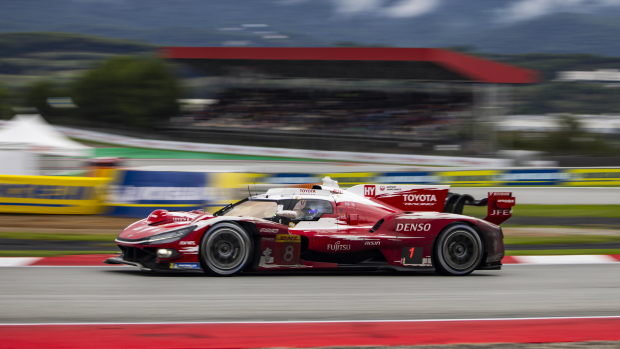
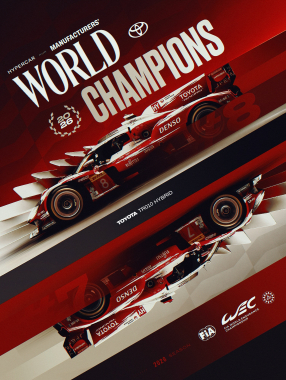
The new-look TR010 Hybrid Hypercar will duly enter the fray, after the marque activated a technical ‘Evo’ joker to upgrade its aerodynamic package. Powered by the existing 3.5-litre V6 engine, it will race in a bold and vibrant, predominantly red livery.
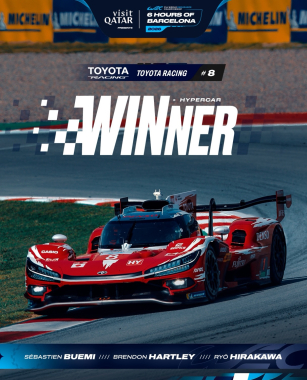
TOYOTA GAZOO Racing has also metamorphosed into TOYOTA RACING as an official entrant name. While these changes are significant, the driver roster has a very familiar look to it. Conway, Kobayashi and de Vries continue in the #7 car, while Sébastien Buemi, Brendon Hartley and Ryō Hirakawa go again for a fifth consecutive season together in #8.
Aston Martin
A pair of striking Aston Martin Vantage AMR LMGT3 cars will once again head into battle in FIA WEC in 2026, run by America’s Heart of Racing Team.
#23 Heart of Racing Team Aston Martin
Gray Newell, who created a positive impression during last November’s Rookie Test in Bahrain, will make his FIA WEC debut this season in the #23 Aston Martin. He will do so alongside series sophomore ‘Dudu’ Barrichello – who impressed over the course of his maiden campaign in the championship – and two-time 24 Hours of Le Mans class-winner, Jonny Adam, who returns to the grid following an absence of five-and-a-half years.
#27 Heart of Racing Team Aston Martin
One of the co-founders of the Heart of Racing Team programme, Ian James will continue to juggle management and driving duties in 2026 as he undertakes a fourth FIA WEC season behind the wheel of the #27 Aston Martin. He remains partnered by 2022 IMSA GTD champion, Zacharie Robichon and last year’s Le Mans LMGT3 pole-sitter, Mattia Drudi.
BMW
The famous Bavarian marque returns in 2026 with its distinctive M4 Evo model and a mix of familiar faces and rookie talent across its two entries, fielded by the renowned, Belgium-based Team WRT organisation.
#32 Team WRT BMW
Returning to BMW power for 2025 after a year in McLaren machinery are Sean Gelael and Darren Leung. The pair were team-mates at WRT in 2024, scoring a memorable win at Imola. The Indonesian and Brit rejoin forces with racing royalty, Augusto Farfus, who goes into his 27th season as a professional driver and his sixth in FIA WEC.
#69 Team WRT BMW
There is a real Anglo-American feel to the second Team WRT entry this year, as three relatively new endurance racing faces combine. British GT and GT World Challenge Europe Sprint Cup champion Dan Harper makes the leap to global competition. The Northern Irish ace is joined by former Racing Spirit of Léman Aston Martin driver Anthony McIntosh and FIA WEC debutant Parker Thompson, who is a Canadian Touring Car champion.
Corvette
The rumbling Corvette Z06 returns to LMGT3 action this year, as the slick TF Sport squad bids to build upon a promising 2025 campaign during which it registered wins in both Qatar and Japan.
#33 TF Sport Corvette
There is a subtle change in the line-up of the #33 entry in 2026, as Genesis Hypercar-bound Daniel Juncadella is replaced by a well-known face to the TF Sport outfit – Nicky Catsburg. The 2023 FIA WEC LMGTE Am champion will reprise his partnership with Ben Keating, while Jonny Edgar is kept aboard following a strong first season in the series in 2025.
#34 Racing Team Turkey by TF Corvette
Running within the same stable is the Racing Team Turkey by TF entry, which will feature one of Turkey’s most successful recent drivers, Salih Yoluç. The Istanbul-born ace is a former Asian Le Mans Series and European Le Mans Series champion who also triumphed in the LMGTE Am category at Le Mans in 2020 with TF Sport and his 2026 team-mate, Charlie Eastwood. The pair are joined by Irish racer, Peter Dempsey, who is best-known for racing in Indy Lights.
Ferrari
The Ferrari LMGT3 assault in FIA WEC in 2026 is unchanged from 2025, espousing continuity across the board with a pair of 296 LMGT3 Evo entries run by the world-renowned AF Corse stable.
#21 VISTA AF Corse Ferrari
After challenging for glory in 2025 via a consistent and well-executed campaign, Simon Mann, François Hériau and Alessio Rovera continue into a third straight season together in the #21 Ferrari. Victory at Spa last year was the highlight, but the trio similarly scored podiums at Le Mans and Fuji, ending up just 14 points shy of title-winner, Manthey 1st Phorm.
#54 VISTA AF Corse Ferrari
As consistency goes, Thomas Flohr and Francesco Castellacci are the benchmark in FIA WEC as they enter a remarkable ninth season together. 2026 will also be their fifth with Davide Rigon, as the trio attempt to improve upon their seventh-place championship ranking last time around.
Ford
The muscular Mustang thundered into FIA WEC in 2024, and has been a firm fan-favourite ever since with its throaty, 5.4-litre V8 powerplant. Run by Proton Competition with engineering assistance from the renowned Multimatic company that led the design of the car with Ford Performance, two Mustangs will again be on the LMGT3 grid.
#77 Proton Competition Ford
The #77 entry heads into 2026 with a mostly new-look driving crew. Sebastian Priaulx returns to FIA WEC for the first time since a successful 2022 campaign with Dempsey-Proton Racing that yielded a brace of victories. The young Brit will join season two driver Ben Tuck and ex-touring car and GT4 racer Eric Powell from the United States.
#88 Proton Competition Ford
Flanking well-known Italian duo Stefano Gattuso and Giammarco Levorato in the #88 Ford Mustang is former Williams Formula 1 driver, Logan Sargeant. The American makes his FIA WEC debut in preparation for a full Hypercar season with the ‘Blue Oval’ in 2027.
Lexus
The luxury arm of Japanese automotive giant Toyota enjoyed an upturn in results last season, as hard work on its GT machinery paid dividends with two wins. The Jérôme Policand-helmed Akkodis ASP Team runs the cars for a third consecutive campaign in FIA WEC.
#78 Akkodis ASP Team
There has been a major shake-up in the #78 Lexus, with reigning Michelin Le Mans Cup LMP3 champion, Hadrien David being given a shot alongside countryman Esteban Masson and ex-TF Sport Corvette driver, Tom Van Rompuy.
#87 Akkodis ASP Team
José María López, Clemens Schmid and Petru Umbrărescu – who combined to win the Rolex 6 Hours of São Paulo at Interlagos and Bapco Energies 8 Hours of Bahrain in 2025, on their way to third in the final LMGT3 standings – return in the #87 Lexus for a second season together.
McLaren
It’s all-change for McLaren in 2026, with the famous British brand shuffling its team operations as it prepares to enter the FIA World Endurance Championship’s burgeoning Hypercar category with United Autosports in 2027. That shake-up resulted in successful sportscar squad Garage 59 being appointed the operational hub for the pair of McLaren 720S LMGT3 Evo cars this season.
#10 Garage 59 McLaren
There are plenty of new faces in the cockpit, too, as established British GT and GT World Challenge ace Marvin Kirchhöfer makes his FIA WEC debut. He will race the #10 car alongside 2024/25 Asian Le Mans Series GT3 class champion, Antares Au from Hong Kong and International GT Open race-winner, Tom Fleming from the UK.
#58 Garage 59 McLaren
The #58 entry sees former Akkodis ASP Team Lexus ace, Finn Gehrsitz, team up with Benjamin Goethe – a regular for Garage 59 across several series – and the experienced Alexander West, a long-time McLaren competitor in GT racing.
Mercedes-AMG
The famous three-pointed star brand returned to global endurance competition last season with the Iron Lynx outfit, learning a huge amount with its AMG GT3 model. In 2026, the Stuttgart-based marque is aiming to capitalise upon its impressive finish to 2025 – highlighted by an excellent run to second place in the Bahrain finale.
#61 Iron Lynx Mercedes-AMG
This is a strong-looking entry packed with experience, featuring former FIA WEC LMP2 champion, Rui Andrade and highly-decorated GT driver, Maxime Martin. They are partnered by Martin Berry, who joined the team from Spa onwards last season and was part of the crew that secured the runner-up spoils in Sakhir.
#79 Iron Lynx Mercedes-AMG
Lin Hodenius proved last year that he is a young driver worth watching, and he stays on-board for 2026. The Dutch teenager is joined by experienced Iron Lynx racer Matteo Cressoni and FIA WEC newcomer, Johannes Zelger, who has campaigned Porsche machinery in a variety of championships, including the Asian Le Mans Series and Intercontinental GT Challenge.
Porsche
Porsche is unbeaten in the LMGT3 category, having claimed both titles to-date with Manthey PureRxcing in 2024 and then last season with the Manthey 1st Phorm-entered 911 GT3 R.
#91 Manthey DK Engineering
Under the DK Engineering banner, the #91 Manthey Porsche boasts an intriguing line-up that blends experience with one of the most highly-anticipated debuts in recent seasons. Ayhancan Güven lifted the DTM laurels in dramatic circumstances with Porsche in 2025, and will compete in LMGT3 for the first time. However, the Turkish star is no stranger to GT3 machinery, having won the 2024 Bathurst 12 Hour race with Manthey. Güven will be joined by ex-United Autosports McLaren driver James Cottingham and young gun Timur Boguslavskiy, who arrives with prior FIA WEC experience from Lexus and BMW.
#92 The Bend Manthey
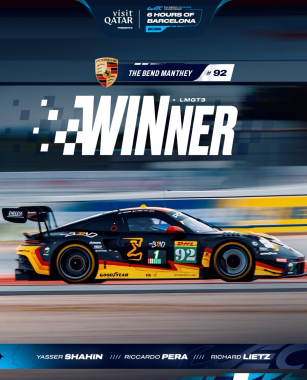
Racing under ‘The Bend’ moniker – reflecting the now-established Australian race circuit in which he and his brother have a majority shareholding – Yasser Shahin returns to Porsche power after piloting a BMW last season. The former 24 Hours of Le Mans class-winner will join reigning LMGT3 champions Richard Lietz and Riccardo Pera, who triumphed at Imola and La Sarthe in 2025 en route to clinching the coveted series crown, scoring points in all-bar one round along the way.
FREE PRACTICE
Ahead of qualifying, there are multiple practice sessions where teams can test their cars, adjust set-ups and assess track conditions.
QUALIFYING
Modified in 2024, the qualifying format is split into separate blocks for Hypercar and LMGT3 contenders. In each case, following a 12-minute initial session, the fastest ten competitors advance to a ten-minute ‘Hyperpole’ shootout to determine the leading positions on the starting grid, with pole position carrying an additional championship point.
POLE POSITION
Pole position is the top spot on the grid. It is awarded to the driver who sets the fastest time during Hyperpole, meaning their car starts at the front of its category in the race.
RACE
The main event of the weekend, during which the big points are distributed. FIA WEC races range in duration from six hours at Imola, Spa-Francorchamps, Interlagos, COTA and Fuji to eight hours in Bahrain, approximately ten hours (1812km) in Qatar and 24 hours at Le Mans. The points distribution depending on length of the race can be found below.
According to their racing record and career achievements, drivers in the FIA World Endurance Championship are categorised by a dedicated FIA committee as follows:
Bronze-rated drivers are not authorised to participate in the headlining Hypercar class, which is reserved for global endurance racing’s elite. This means each team’s drivers must be a mix of Silver, Gold and Platinum-graded.
By contrast, it is mandatory for all LMGT3 crews to include at least one Bronze driver and another that is either Bronze or Silver-rated. Each car must therefore feature a combination of Bronze, Silver and possibly Gold drivers. This ensures a balance of experience while offering less seasoned drivers the opportunity to participate in major competitions.
Hypercar: No Bronze drivers admitted
LMGT3: A crew of two or three drivers including at least one Bronze driver, plus another Bronze driver or a Silver driver
PLATINUM DRIVER
Platinum is the highest category in the FIA driver classification, including the most experienced and highest-performing drivers in the motorsport world. These are often living legends of the sport, with extremely successful international careers. They have excelled in high-level races, including competitions like Formula 1, the 24 Hours of Le Mans or other globally-renowned events.
GOLD DRIVER
A Gold driver is a very high-level driver. These drivers have frequently shone in prestigious competitions such as Formula 1, the 24 Hours of Le Mans or other major series. They are considered world-class athletes, capable of performing at a very high level, even in the most demanding races.
SILVER DRIVER
A Silver driver has significant experience but is still considered to have areas for improvement compared to the world’s best drivers (Gold and Platinum). A Silver driver may have achieved good results in lower-tier series while still lacking consistency or exceptional performance on the international stage. They may also be a young driver starting to climb the ranks in motorsport.
BRONZE DRIVER
A Bronze driver is generally a less experienced driver, often older or who has not yet reached a skill level comparable with that of more experienced drivers. The FIA assigns this category to drivers who do not have such impressive results in major races or who lack significant performance statistics in high-level series. Bronze drivers are often considered beginners or amateurs in a professional setting.
Michelin
A key technical partner to the FIA World Endurance Championship since the series’ foundation in 2012, Michelin was selected by the FIA and the Automobile Club de l’Ouest (ACO) to supply tyres to the premier Hypercar category from its launch in 2021.
Michelin regards motorsport as a catalyst for innovation. Endurance racing aligns perfectly with the Group’s ‘all-sustainable’ vision, reflecting its core values and providing the ideal platform to demonstrate the long-lasting performance embodied by the Michelin tyres designed every day, while developing ever-more sustainable products in accordance with the company’s 2050 strategy.
The new MICHELIN Pilot Sport Endurance tyres equipping all Hypercars from the 2026 season have been manufactured using 50% renewable and recycled materials, while beneath their avant-garde design lies even more cutting-edge performance.
Moreover, the technological relevance of FIA WEC’s current regulations has strengthened Michelin’s partnerships with the world’s leading automotive brands, helping to accelerate the transfer of its innovations from racetrack to road – as the strong and consistent growth in the number of fans simultaneously showcases those innovations to an ever-greater audience.
Goodyear
Goodyear played a defining role in 2025 – the sophomore campaign for FIA WEC’s LMGT3 category. As the exclusive tyre-supplier to the class, the brand focused its development on delivering an optimal balance between durability and performance across a fiercely-contested grid and constantly evolving race conditions.
The competitiveness of the LMGT3 class was evident throughout the season, with five different teams claiming victories. Peak performance was achieved at the legendary 24 Hours of Le Mans, where several drivers completed up to four consecutive stints on a single set of tyres – equivalent to as much as 600km, or twice the distance of a Formula 1 Grand Prix – and the winning car registered a record-breaking 341 laps.
Indeed, over the course of the campaign, the longevity of Goodyear’s Eagle tyres regularly surpassed maximum drive-time limits, highlighting a considerable technological accomplishment.
In 2026, teams will have access to Goodyear’s proven and versatile Eagle Medium compound alongside the wet tyre at all rounds. As always, the company’s work on-track significantly shapes its production tyre range, and with LMGT3 cars closely reflecting their road-going counterparts, technology developed in endurance racing continues to drive progress both on and off the circuit.
In 2022, the FIA World Endurance Championship adopted a new fuel – TotalEnergies’ Excellium Racing 100.
This 100% renewable fuel is produced from bio-ethanol – itself the product of wine residues from the French agricultural industry – as well as ETBE manufactured at TotalEnergies’ Feyzin refinery near Lyon (France) from feedstock also sourced from the circular economy. Thanks to its 100% biomass origin, Excellium Racing 100 reduces greenhouse gas emissions by at least 65% compared with traditional fossil fuels.
6-Hour Race
1st: 25 points; 2nd: 18 points; 3rd: 15 points; 4th: 12 points; 5th: 10 points; 6th: 8 points; 7th: 6 points; 8th: 4 points; 9th: 2 points; 10th: 1 point
8-Hour or 10-Hour Race (or 1812km)
1st: 38 points; 2nd: 27 points; 3rd: 23 points; 4th: 18 points; 5th: 15 points; 6th: 12 points; 7th: 9 points; 8th: 6 points; 9th: 3 points; 10th: 2 points
24 Hours of Le Mans
1st: 50 points; 2nd: 36 points; 3rd: 30 points; 4th: 24 points; 5th: 20 points; 6th: 16 points; 7th: 12 points; 8th: 8 points; 9th: 4 points; 10th: 2 points
An additional championship point is awarded, at each round, to the crew securing pole position in each category during the Hyperpole sessions, counting towards the overall Drivers’ and Manufacturers’ classifications.